


Feb 20, 2025 | 4 min read
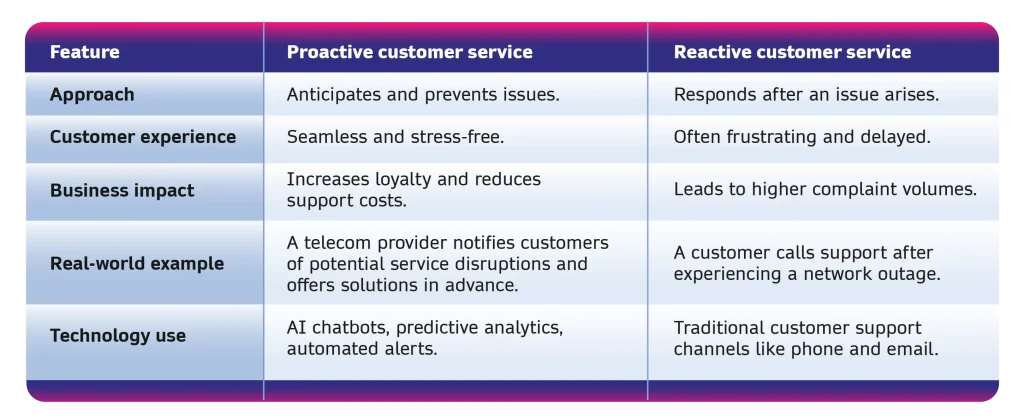
The key strategies businesses use to deliver effective proactive support are:
Use AI-powered chatbots, predictive analytics and automated notifications to offer real-time solutions. Automated alerts for order status updates, service outages and payment reminders enhance proactive customer care by keeping customers informed before they need to ask.
Proactive customer service thrives on personalization. Businesses analyze customer data to offer tailored product recommendations, exclusive discounts and timely service reminders. This approach strengthens relationships and boosts engagement. Eighty one percent of service professionals say customer expectations for personalized interactions have increased.
Providing a knowledge base, FAQs and AI-driven virtual assistants empowers customers to find solutions on their own. Proactive support through self-service tools reduces customer effort and improves satisfaction.
By tracking customer interactions and preferences, businesses identify potential issues before they escalate. For example, e-commerce platforms detect abandoned carts and send proactive follow-ups with discounts or assistance offers.
Customer service teams should have the right tools and mindset to anticipate customer concerns. Encouraging agents to reach out before issues arise—such as checking in with customers after a purchase—enhances proactive customer care.
Actively collect and analyze customer feedback to identify areas for improvement. Businesses that act on feedback show customers they care, strengthening brand loyalty and refining their proactive service strategies.
In the telecom sector, proactive customer care reduces service disruptions and enhances user experiences. Telecom providers send alerts about potential outages, offer self-service troubleshooting options and provide personalized plan recommendations based on usage patterns. This proactive support minimizes frustration and reduces call center volumes.
Proactive customer service is critical in travel and hospitality, ensuring seamless guest experiences. Airlines notify travelers of flight delays and offer rebooking options, while hotels use AI-powered chatbots to provide early check-in alerts or special offers. These efforts enhance guest satisfaction and brand loyalty.
Retailers leverage Proactive customer service to improve shopping experiences and boost sales. Automated order tracking updates, personalized product recommendations and proactive support through chatbots help customers make informed decisions. Brands that prioritize proactive customer care see higher conversion rates and repeat purchases.
Financial services call centers play a vital role in delivering proactive support to banking and insurance customers. Banks notify clients of suspicious transactions, upcoming payment due dates and customized financial products based on their transaction history.
in energy and utilities ensures uninterrupted service and customer convenience. Utility providers send alerts about planned maintenance, offer energy-saving tips and provide real-time outage updates through mobile apps. These proactive initiatives help customers manage their energy usage effectively.
In healthcare, proactive customer care improves patient engagement and health outcomes. Hospitals and clinics send appointment reminders, medication alerts and wellness tips via SMS or email. Telehealth services use AI to follow up with patients post-treatment, ensuring timely medical attention and better patient satisfaction.
Read our blog: Generative AI Contact Center: Revolutionize Customer Service
Startek All Rights Reserved