


July 07, 2026 | 5 min read
Customer expectations and buying behaviors continue to evolve, making retail customer satisfaction a critical driver of long-term growth and brand resilience.
Rising customer expectations
Today’s consumers expect personalized interactions, fast delivery, seamless service and quick issue resolution. As expectations continue to rise, retailers must consistently deliver experiences that meet or exceed them. This shift underscores the importance of customer satisfaction in building trust and loyalty.
Omnichannel shopping behavior
Modern shoppers move between websites, mobile apps, social media, physical stores and support channels throughout their buying journey. They expect a consistent experience at every touchpoint. Retailers that connect online and offline experiences reduce friction and improve retail customer satisfaction.
Increased competition and lower switching costs
Customers have more choices than ever, and switching brands often takes only a few clicks. In this competitive environment, customer satisfaction in the retail industry plays a crucial role in retaining customers and encouraging repeat purchases.
Customer experience as a competitive differentiator
Price and product selection alone no longer drive loyalty. Customer experience has become a key differentiator, helping retailers build trust, strengthen relationships and increase customer advocacy. Brands that prioritize retail customer satisfaction stand out in crowded markets.
Satisfaction directly influences loyalty and profitability
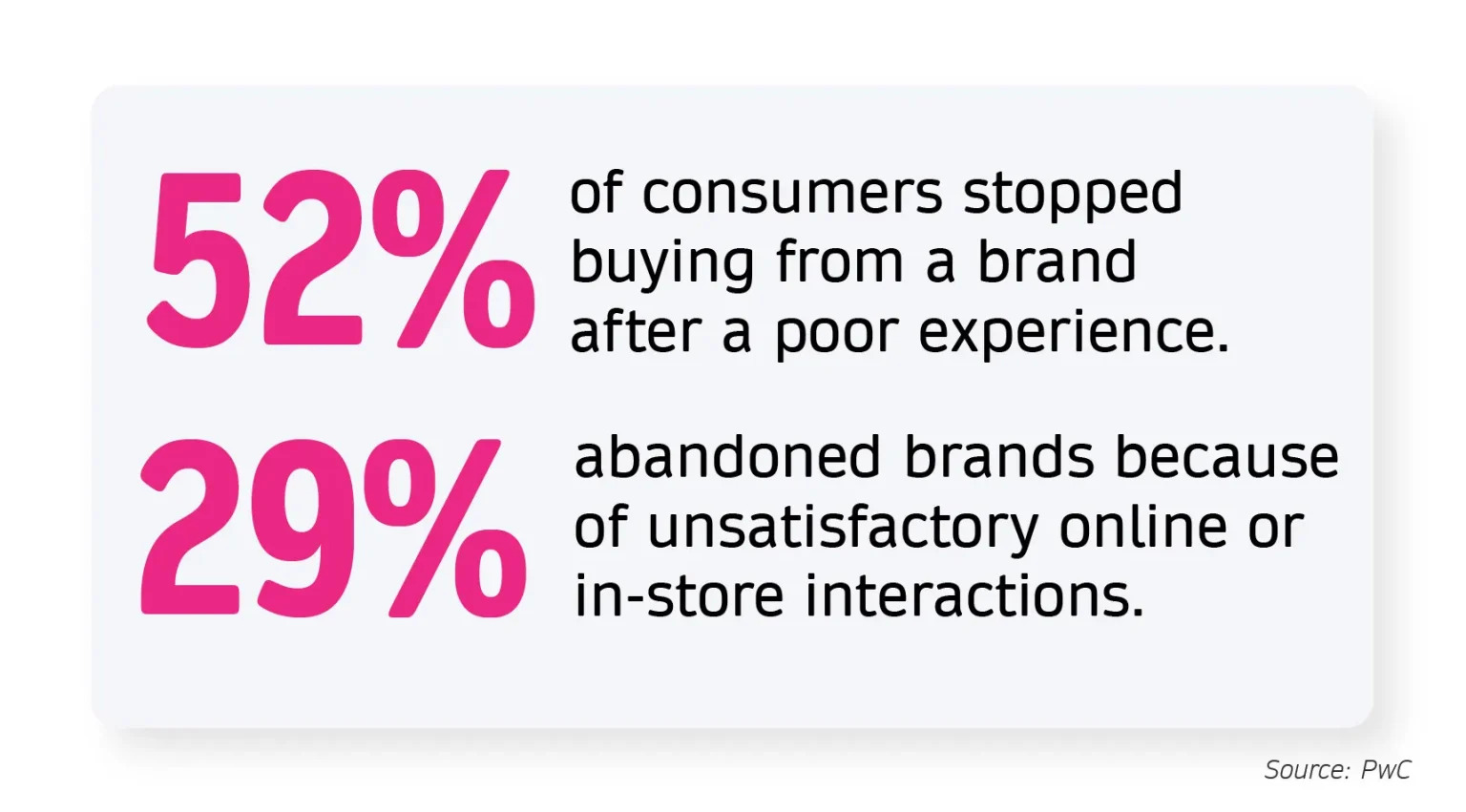
Recent research underscores the strong connection between retail customer satisfaction and business performance, reinforcing the importance of customer satisfaction as a strategic driver of loyalty, retention and profitability.
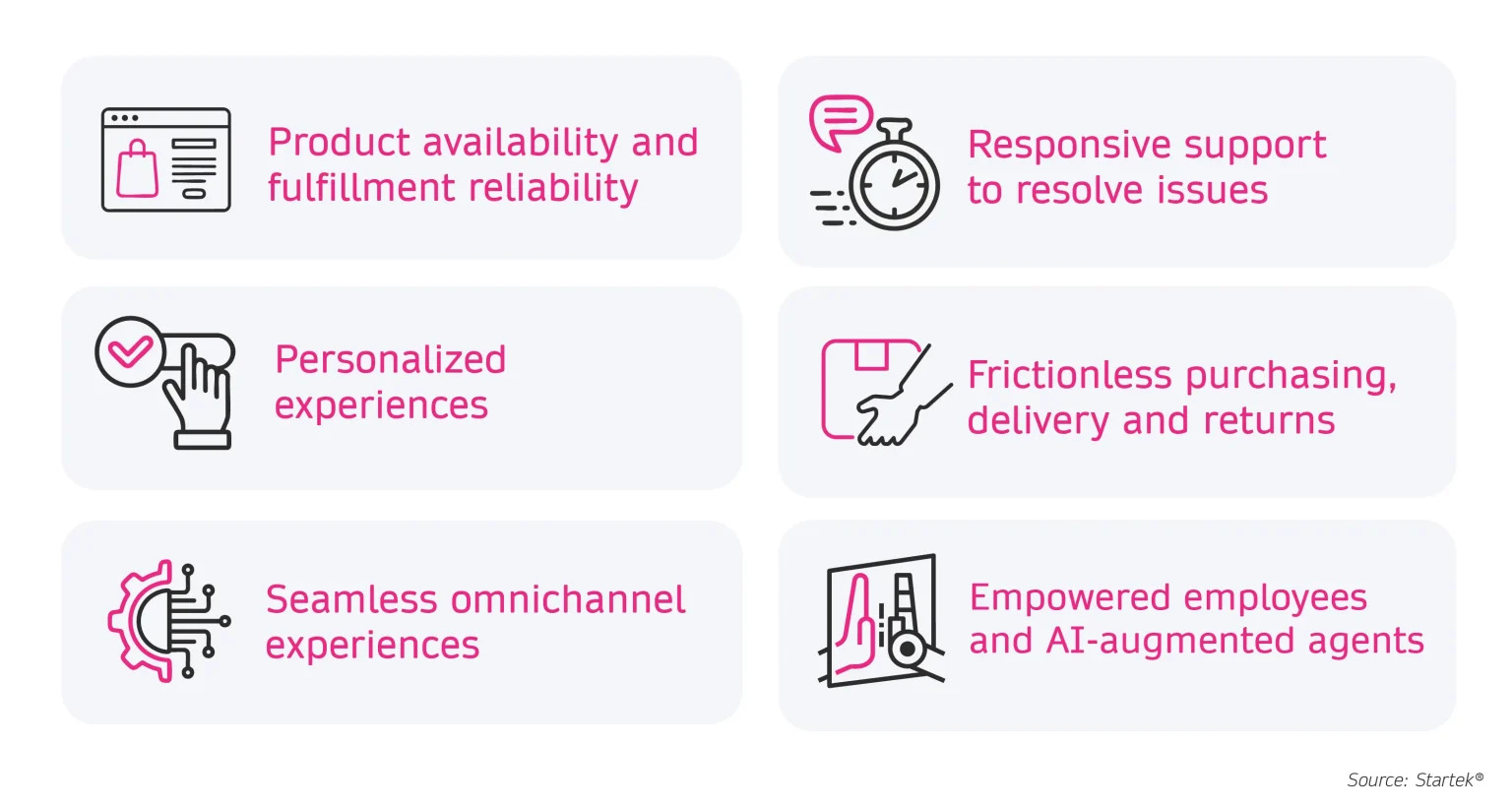
Several interconnected factors shape retail customer satisfaction, and retailers that optimize these experiences create stronger customer relationships, higher loyalty and sustainable growth.
Product availability and fulfillment reliability
Customers expect products to be available and delivered as promised. Stockouts, shipping delays and inaccurate inventory information quickly damage trust. Retailers that ensure reliable fulfillment and inventory visibility create more positive customer experiences.
Personalized experiences
Personalization helps retailers build stronger customer relationships. Tailored product recommendations, relevant offers and personalized interactions make customers feel understood and valued. These experiences increase engagement, loyalty and overall retail customer satisfaction.
Seamless omnichannel experiences
Today’s customers interact with brands across stores, websites, mobile apps and social channels. They expect a consistent experience throughout their journey. Retailers that connect these touchpoints reduce friction and improve customer satisfaction.
Responsive support to resolve issues
Fast and effective support plays a critical role in customer satisfaction. Customers want quick answers and resolutions across their preferred channels. Retailers that provide responsive service strengthen trust and improve the overall customer experience.
Frictionless purchasing, delivery and returns
Convenience significantly influences purchasing decisions. Simple checkout processes, flexible delivery options and hassle-free returns create a smoother customer journey. Reducing friction at every stage helps retailers improve retail customer satisfaction and encourage repeat purchases.
Empowered employees and AI-augmented agents
Employees and agents shape many customer interactions. Providing them with AI-powered tools and real-time insights enables faster and more personalized support. Empowered teams deliver better experiences while strengthening customer satisfaction and loyalty.
Retailers improve customer satisfaction by combining customer-centric strategies with data, AI and operational excellence.
Build a unified customer view across channels
Connect customer data across touchpoints to deliver consistent and personalized experiences throughout the customer journey.
Leverage AI to personalize every interaction
Use AI-powered insights to deliver relevant recommendations, tailored offers and personalized support at scale.
Implement Voice of Customer (VoC) programs
Collect and analyze customer feedback regularly to identify pain points and continuously improve experiences.
Optimize customer journeys using behavioral analytics
Leverage behavioral data to understand customer actions, eliminate friction, and enhance key moments in the buying journey.
Expand intelligent self-service capabilities
Provide AI-powered self-service options that enable customers to find answers and resolve issues quickly and independently.
Use predictive analytics
Analyze historical and real-time data to proactively address customer needs before they become issues.
Build a customer-centric culture
Align people, processes and technology around customer needs to deliver consistently positive experiences and drive customer satisfaction in the retail industry.
Omnichannel communication
Modern call center solutions should unify voice, email, chat, social media and messaging channels in a single interface. This capability enables agents to manage conversations efficiently and deliver consistent support across every touchpoint.
AI and automation
AI-powered features such as virtual assistants, intelligent routing, agent assistance and workflow automation help reduce manual effort and accelerate issue resolution.
Cloud-based scalability
Cloud-based call center solutions provide the flexibility to scale operations as business needs evolve. Organizations will be able to add users, expand services and support remote teams without investing in additional infrastructure.
Analytics and reporting
Advanced analytics tools transform customer and operational data into actionable insights. Real-time dashboards and performance reports help leaders monitor service quality, optimize resources and identify opportunities for improvement.
CRM and business system integration
A strong call center solution should integrate seamlessly with CRM platforms and other business applications. Integrated systems provide agents with a complete view of customer information, enabling faster and more personalized service.
Startek helps retailers enhance retail customer satisfaction through AI-powered customer experience solutions, omnichannel support, intelligent automation and advanced analytics. By enabling personalized interactions, seamless customer journeys and faster issue resolution, Startek empowers retailers to strengthen loyalty, improve retention and drive long-term business growth.
Startek All Rights Reserved